Making ‘Make It in Media’: The View from the Podcast Production Studio
Stand by. And 5, 4, 3, 2…
It’s not everyday you get a behind-the-scenes look of a podcast production, but when you do you never forget it. I got the chance to sit in on the taping of the new season of Center for Communication’s Make It in Media podcast! As it was my first time ever being in a production studio, I was excited to observe all the work that brings a final polished product to life—and to report back as much as I can.
Call time
Our day started off at 12:00 at BRIC, the community arts event and production space in Downtown Brooklyn where Make It in Media is recorded. After some quick introductions and donuts, everyone got straight to work. Like at any job, time is of the essence, but nowhere is that more true than in production. When working with so much equipment and crew, you have to use your time wisely, and part of that is coming prepared. Lines were rehearsed, scripts were printed, cameras were set up, marks were set…all this work was done before our day even started.
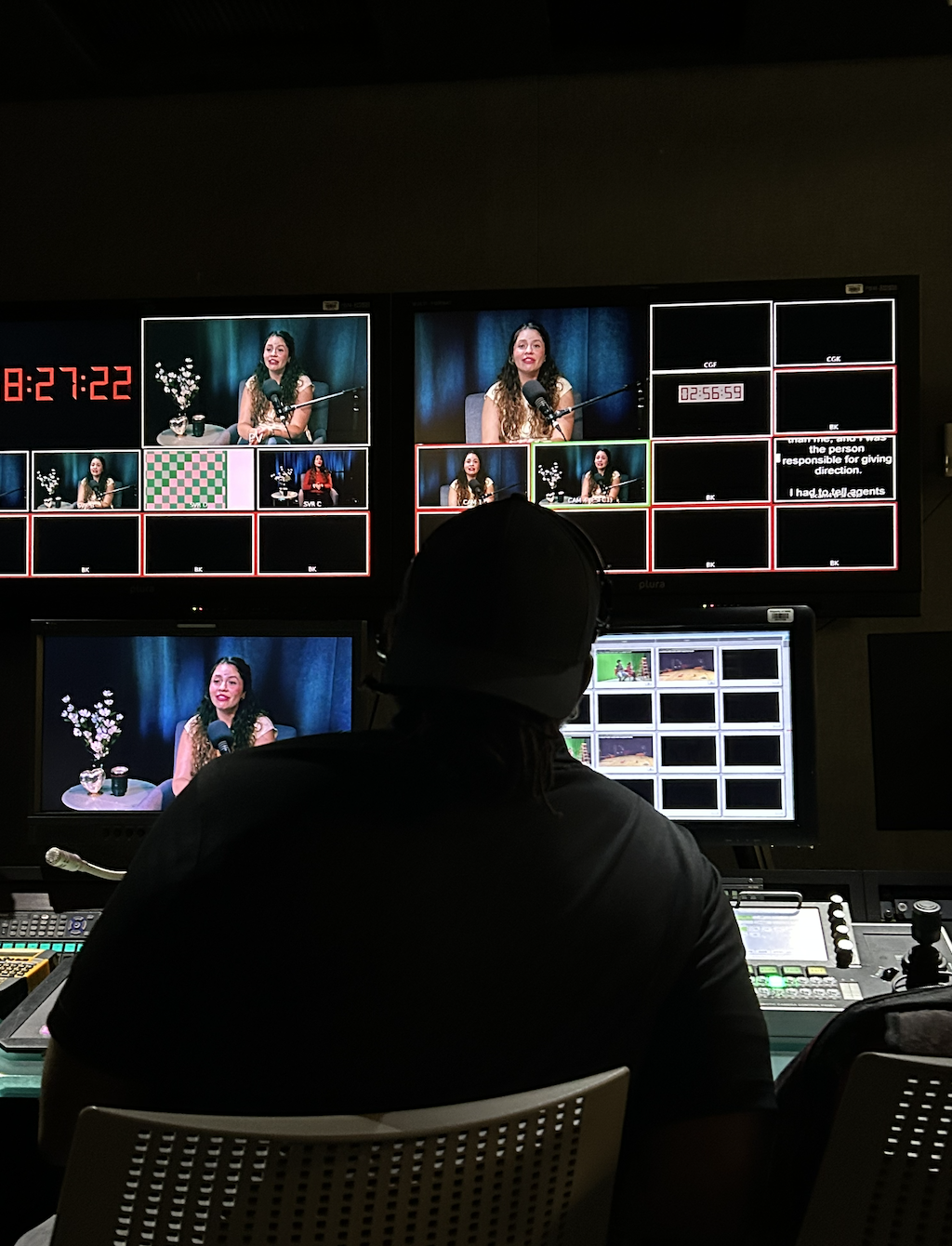
With everyone ready, I joined Derick Borbon, the Lead Writer and Executive Producer of Make It in Media, and the BRIC studio crew in the control room, which is separated by a door and a large window from the studio set, where Mariangelica DeCastro, the Floor Manager and Head of Social Media joined the show’s host Camila Brango. Before long, we were ready to roll.
Framing the shot
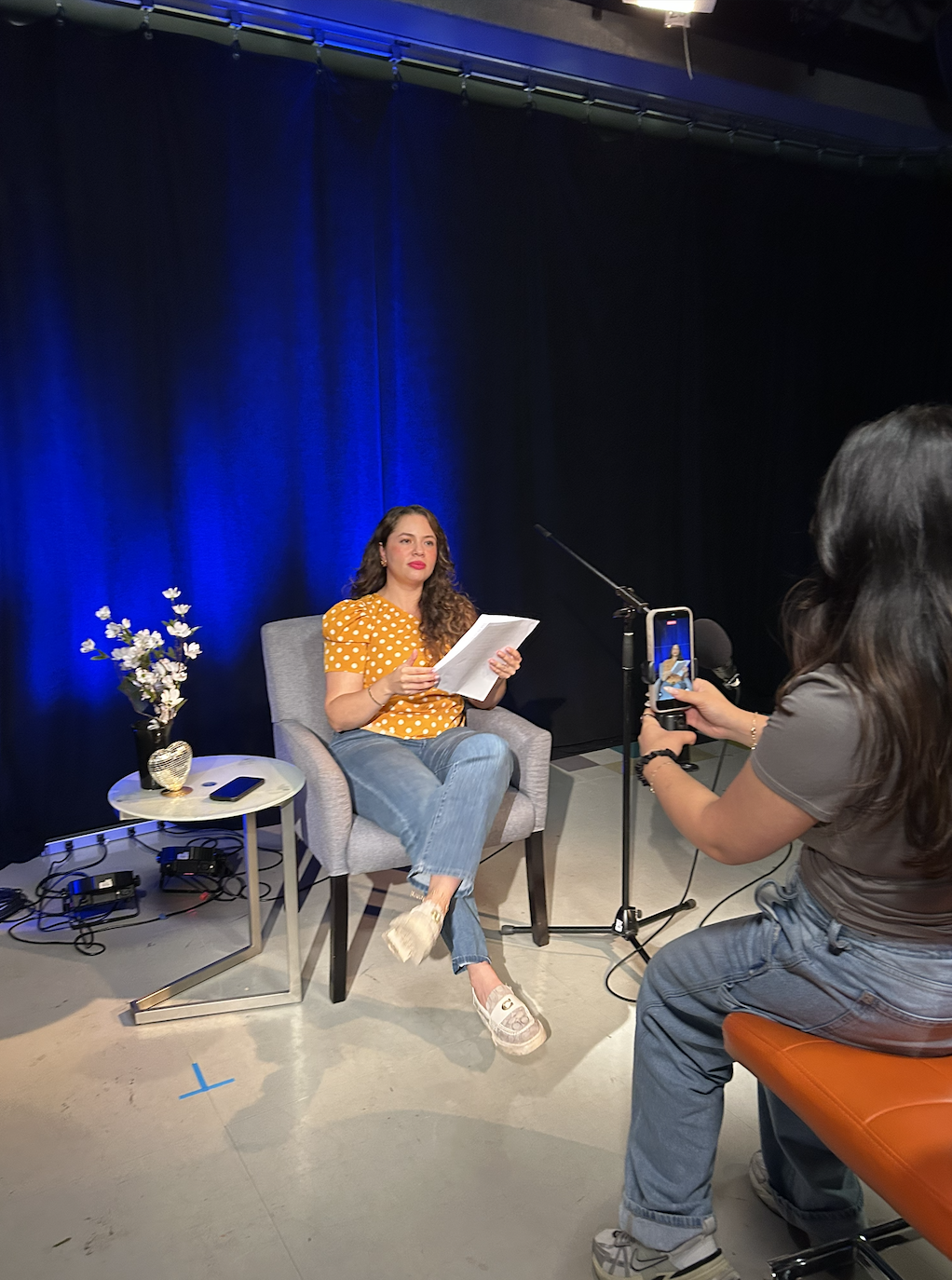
Because Make It in Media is both a video and audio podcast, we have to pay attention to the visuals. So, when setting up the cameras, we’re not just thinking of getting the subject in frame but also how the angle can best engage the audience. The two cameras were operated by BRIC’s Clinton Philson Jr. and Jose Astorga, the podcast’s director and studio engineer, respectively. They talked back and forth with Derick, playing around with close ups, adjusting camera heights, and rearranging props, like the table accessories and chairs.
When thinking about visuals, you have to think about everything on the screen. Even something as simple as flowers can change the look of a shot. Color is also an important factor; it sets the mood for your video and can compliment or clash with your subject. While the crew relied on the technology to help them, when it comes to visuals they reminded me of one tip: keep the machine in mind but always trust your gut. Something might work on paper but look very different in real life, so you have to be ready to pivot. One of my favorite parts of the day was changing the lights and watching all the colors on set change, almost like magic.
Sounds good
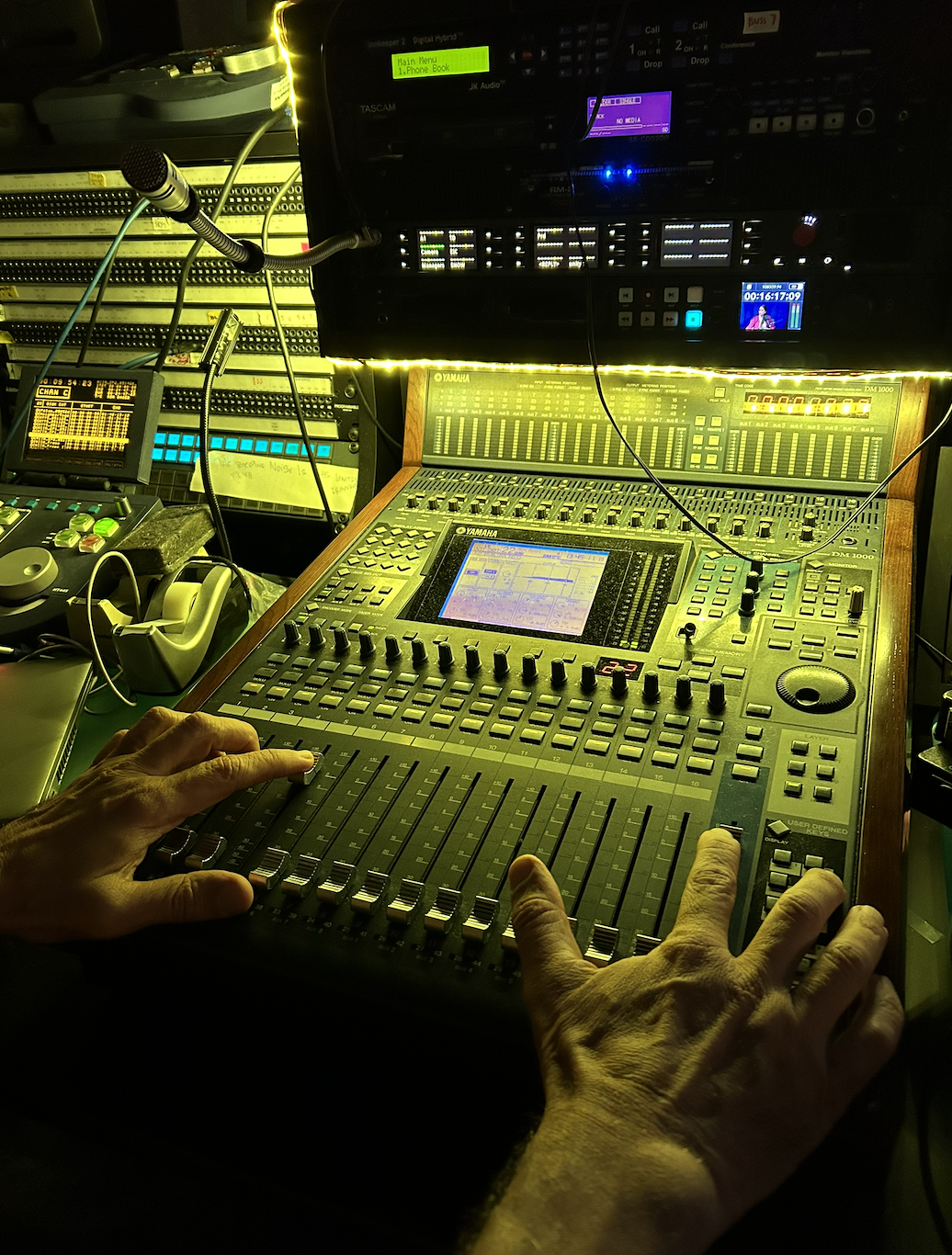
Of course, for a podcast, it’s critical to make sure the audio sounds clear and crisp. I talked with Zak Sherzard, the audio engineer, about how he made sure our sound sounded good. He showed me the sound board and explained the audio levels they controlled. Even though we were in a closed studio and not moving around, the audio still needed to be checked throughout the day, withZak changing the microphone positioning, correcting the pitch, and adjusting the audio levels on Cami’s voice. Similar to the visuals, the sound board can help you pick up any irregularities in pitch, but with practice, you can learn to trust your ear, too.
Take after take
One important skill I observed on set was being able to adjust on the fly. As you’re recording, you often find out what works best in the moment, which means you might end up cutting out a phrase or adding an entirely new one. From the speed of the script scrolling on the teleprompter to the pace of the host’s speech, timing is everything, and it often takes more than one take or even three takes to get there. What made the production succeed was how open everyone was to making changes. What makes it fun was how everyone was able to laugh about a mistake and then move on with the production.
And thanks to this team’s ability to communicate and work so well together, we were able to record SIX episodes worth of material and still finish right on schedule.
I’m so glad I was able to get a glimpse into the world of production and to shadow our producers and crew at work. Not only was it fun, but it also opened my eyes to the different paths you can take to work in the production industry. It was an exciting first experience and definitely won’t be my last!
And the best part is that the episodes we worked on start dropping SOON! So stay tuned to see and hear how it all came together — and let us know what you think!😉⚡